March 27, 2025
It’s Spring! I just saw my first wildflowers in bloom on Decatur Island last week (spring gold AKA Lomatium utriculatum and blue-eyed Mary AKA Collinsia parviflora). The spring adage, “April showers bring May flowers,” could use an update in a fast-changing climate. With longer daylight, warm temperatures, and plenty of water, wildflowers and weeds alike are racing toward flower and seed production. Here’s a few invasive plants to focus your eyes and efforts on in the next couple months.
Poison hemlock plants are growing before our very eyes throughout the county, preparing to send a rigid, flowering stalk skyward. The lacey vegetation is beautiful, and highly toxic to people, pets, farm animals, and wildlife. The leaves could be tragically mistaken for flat-leaved parsley or other similar-looking garden vegetables. A member of the carrot family, it has a long taproot and flattened seeds that disperse in the wind. It often gets around in fill dirt, so it’s highly advisable to check the source of your deliveries for contaminated material. We all need to do our part to look out for this invasive weed and take action to keep its spread in check. It’s out-of-control in Port Townsend, and you may have noticed it widely spread around the Anacortes Ferry Terminal and along the highway to I-5. If you think you have poison hemlock lurking in your spaces but you aren’t sure, check out this ID guide or send us a photo by email: noxiousweeds@sanjuancountywa.gov.
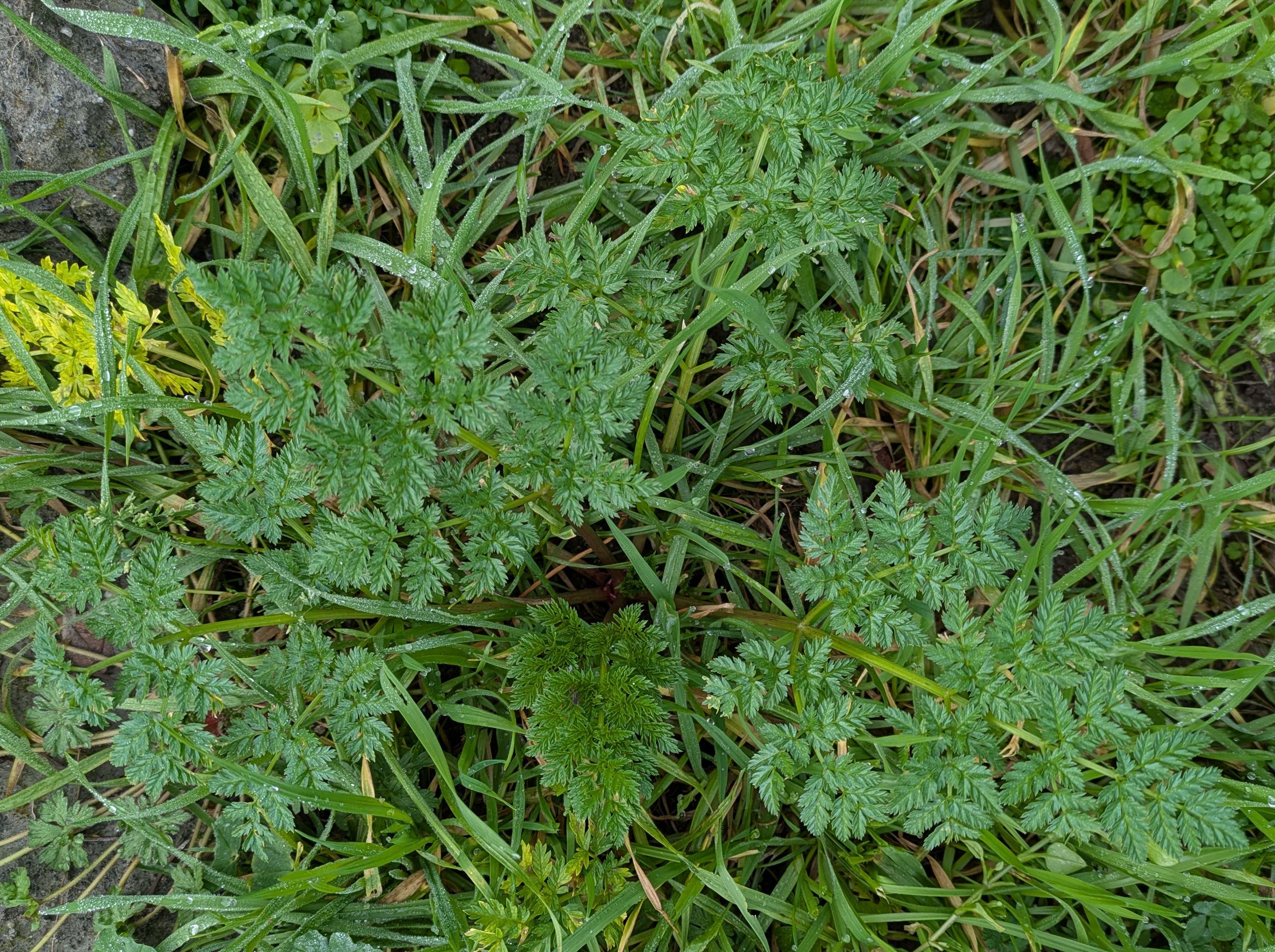 Do not mow poison hemlock or burn debris, as breathing in the vapors can be harmful. Small infestations can be removed manually if you get them out by the roots. Using a garden fork and gloves (and wearing long sleeves), loosen the soil around the plant until a controlled tug of the vegetation brings up the roots. Avoid snapping the top off, as the resolved root will simply try again. It’s best to discard the vegetation in a plastic bag and take it to the dump for free disposal. Larger infestations may either be covered with a UV-resistant tarp or spot-treated using an appropriate herbicide. Please be in touch with us for the best practices for using herbicide. If you’re reading this in late summer after the tall stalks have set seed, carefully cut off the seed heads and place them in a plastic garbage bag to keep the seed contained during transport to the dump.
Spurge laurel thrives under shady canopies and has already been blooming for weeks. Flowers are small, pale yellow, and tucked under thick, whirled leaves. From a distance, spurge laurel could be confused for rhododendron. Spurge laurel produces black, huckleberry-sized fruits that are consumed by birds who squirt the seeds far from the source. While the berries might look tasty, they are toxic to people, as is the rest of the plant. Like all invasive plants, it can outcompete native plants and dominate the forest shrub layer.
Plants are firmly-rooted and also regrow from the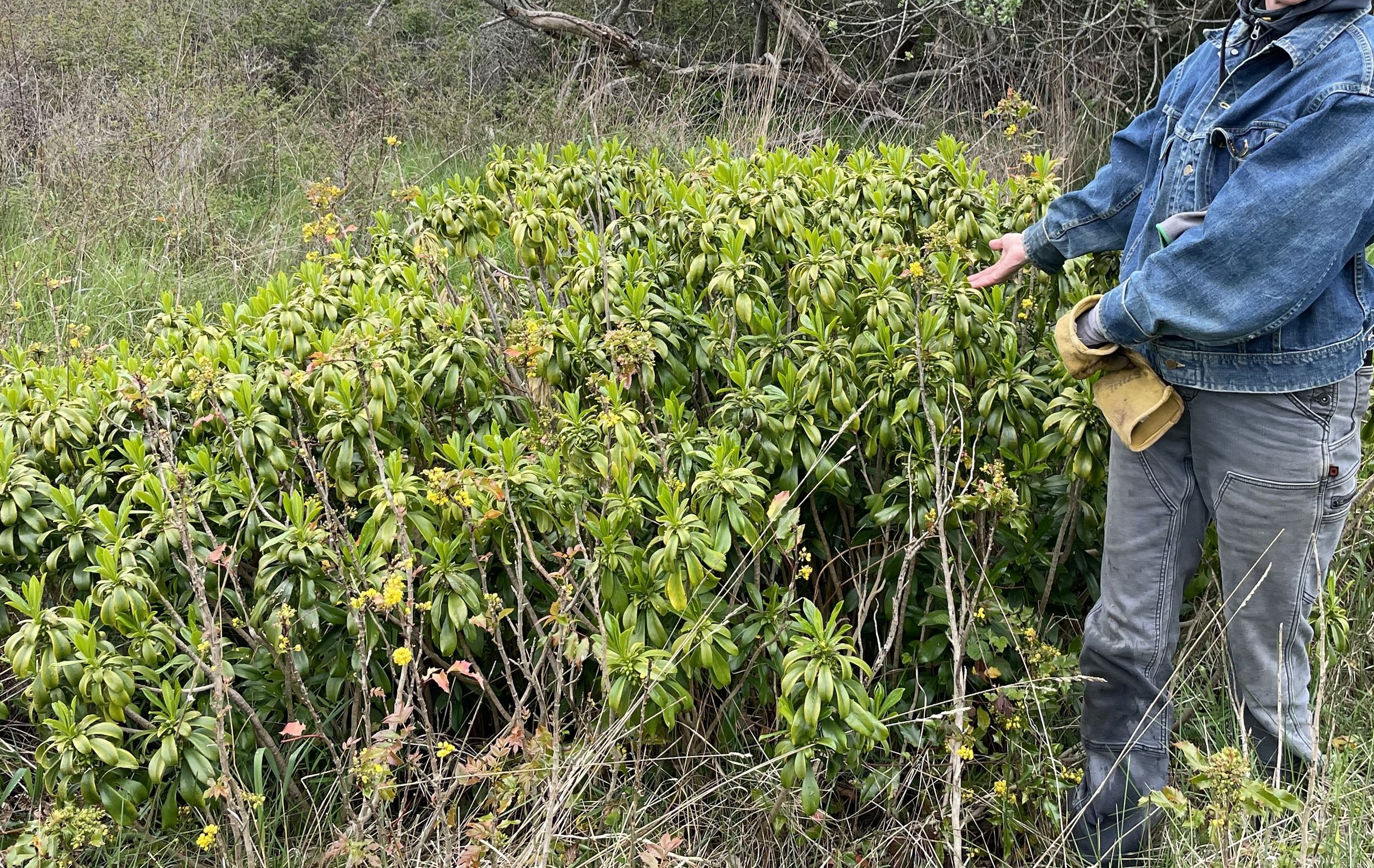 roots if the tops are cut or broken off. You may be able to pull small plants by gloved hand or weed wrench (contact us to borrow one). Larger specimens are best dispatched by lopping off close to the ground and following up immediately with a dab of an appropriate herbicide on the cut surface. In this way, the plant is unlikely to resprout, and herbicide is used very minimally and precisely. If you’re short on time, consider using hand pruners to nip off the flowering/fruiting tips, but note that the plant will try again next year until you get a chance to deal with it properly. Due to the toxicity of spurge laurel, it’s not advisable to mow plants or burn debris, as the vapors or smoke could cause irritation to the skin and lungs.
It takes a community to keep invasive plants in check, and your neighbors appreciate your efforts to keep them from spreading.
Please be in touch if you’ve spotted these weeds (Noxiousweeds@sanjuancountywa.gov or 360-376-3499). Our staff is available for no-cost site consultation or targeted herbicide applications, and we always try to lend a hand in neighborhood-organized work parties.