The original item was published from May 1, 2025 12:22 PM to February 17, 2026 11:04 AM
May 1, 2025
Did you know that San Juan County is the only county in Washington with a legit moat? Over 1000’ deep in some places and a few miles wide, the glaciated channels that define our archipelago have been an effective barrier to new arrivals since time immemorial. Still, moats have their weaknesses, namely boats full of industrious and admiring humans.
Take invasive plants for instance. I’ve heard stories from islanders of their neighbors hopping on the ferry in Anacortes with a bag full of Scotch broom seed, which they enthusiastically scattered out their car window on the way home. At this time of year, it’s easy to see why a person would think this a great idea, as broom plants are covered in a beautiful cloak of golden blossoms.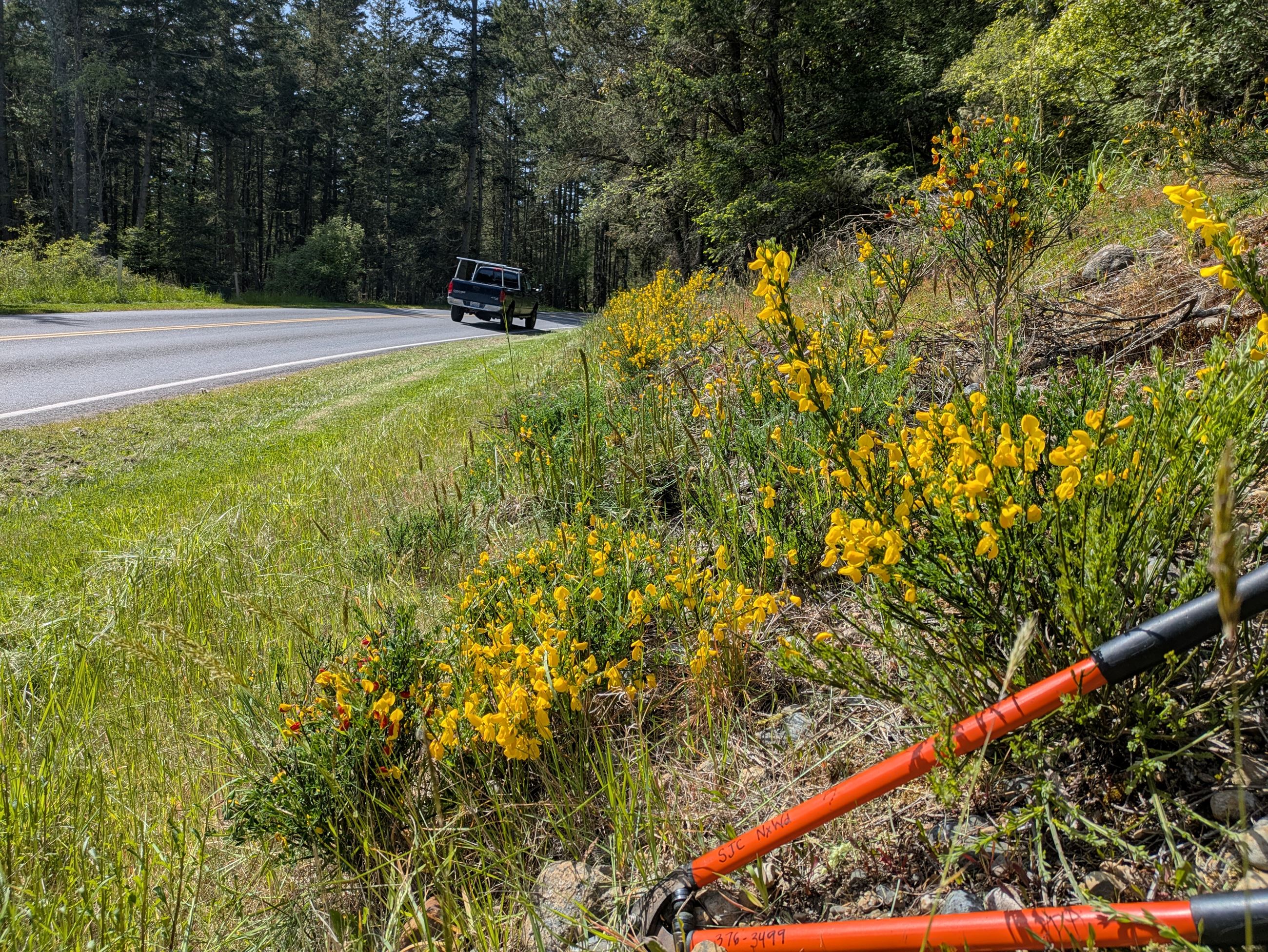
Unfortunately, some introduced plants just don’t play nice. Today Scotch broom is considered a regulated noxious weed in Washington State, due to its ability to march across landscapes shading out a diverse array of species that island ecosystems have depended on for thousands of years. Broom thickets can also be highly flammable during summer and early fall, increasing the risk of wildfire. It’s unlikely we can stuff the Scotch broom genie back in the bottle, but we can leverage strategies that exploit the plant’s weaknesses to contain its spread.
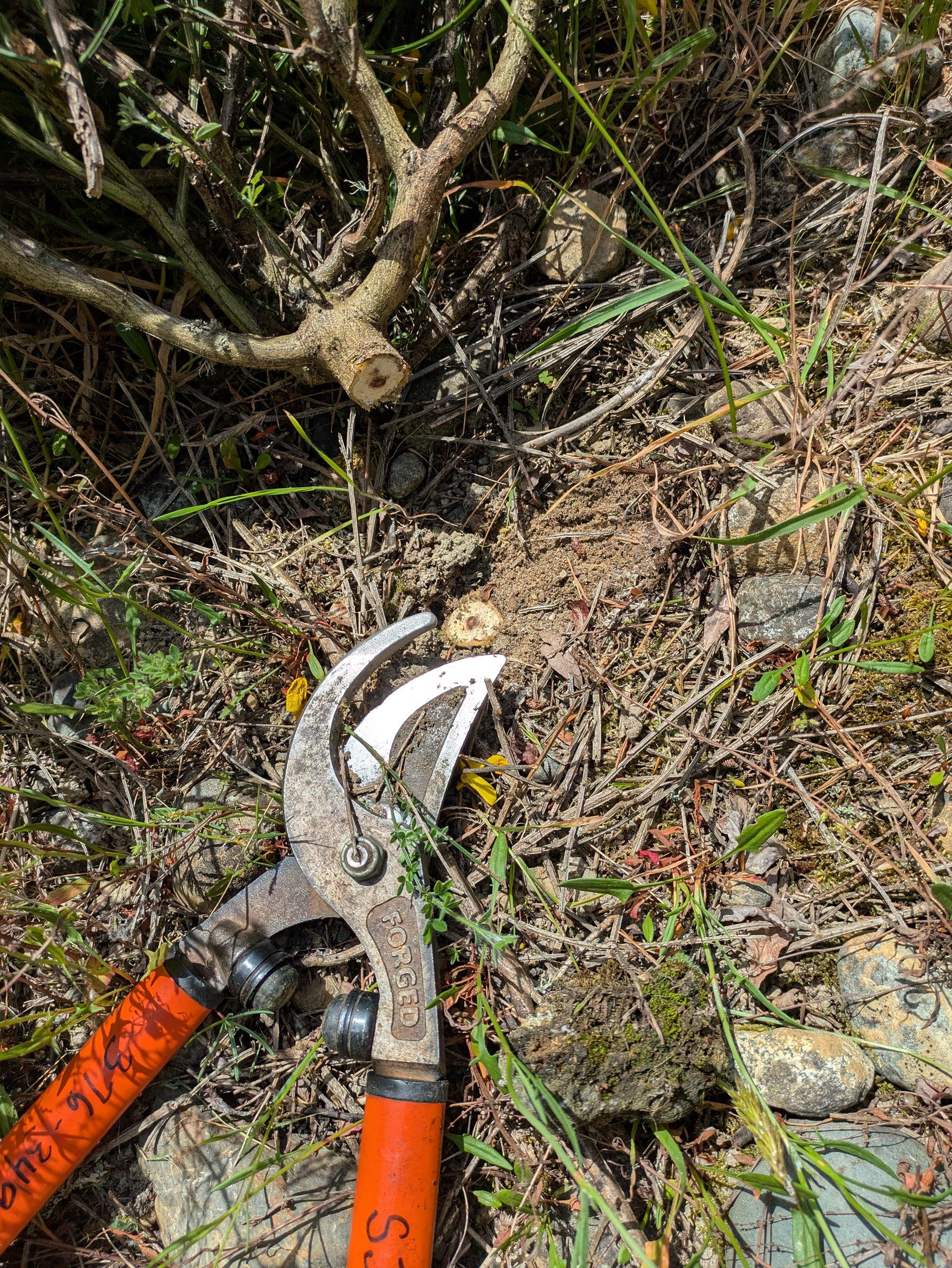 Ordinarily, it would be a mistake to hack a broom plant down and walk away, for they are masters at resprouting with multiple arms that demoralize future attackers. But as we hover on the boundary of spring rains and summer drought, blooming broom has a short window of high visibility and vulnerability. Our friends across the moat on Vancouver Island mobilize major citizen muscle during this period to great effect. They call themselves Broombusters and they freely share their accessible technique on their website.
The Footnotes: Find yourself a decent set of loppers. Jam the jaws into the stem of a blooming broom plant, at or slight below soil level, slice, and repeat. That’s it! With proper technique, this is often enough to fully dispatch most plants. A few may recover; finish them off next season. The debris will quickly decay on site, or small piles can be burned during periods of low fire danger following brush-burning regulations outlined by the San Juan County Fire Marshal’s Office.
Extra Credit: In the long-game of broom control, the lonely plants on the fringe of your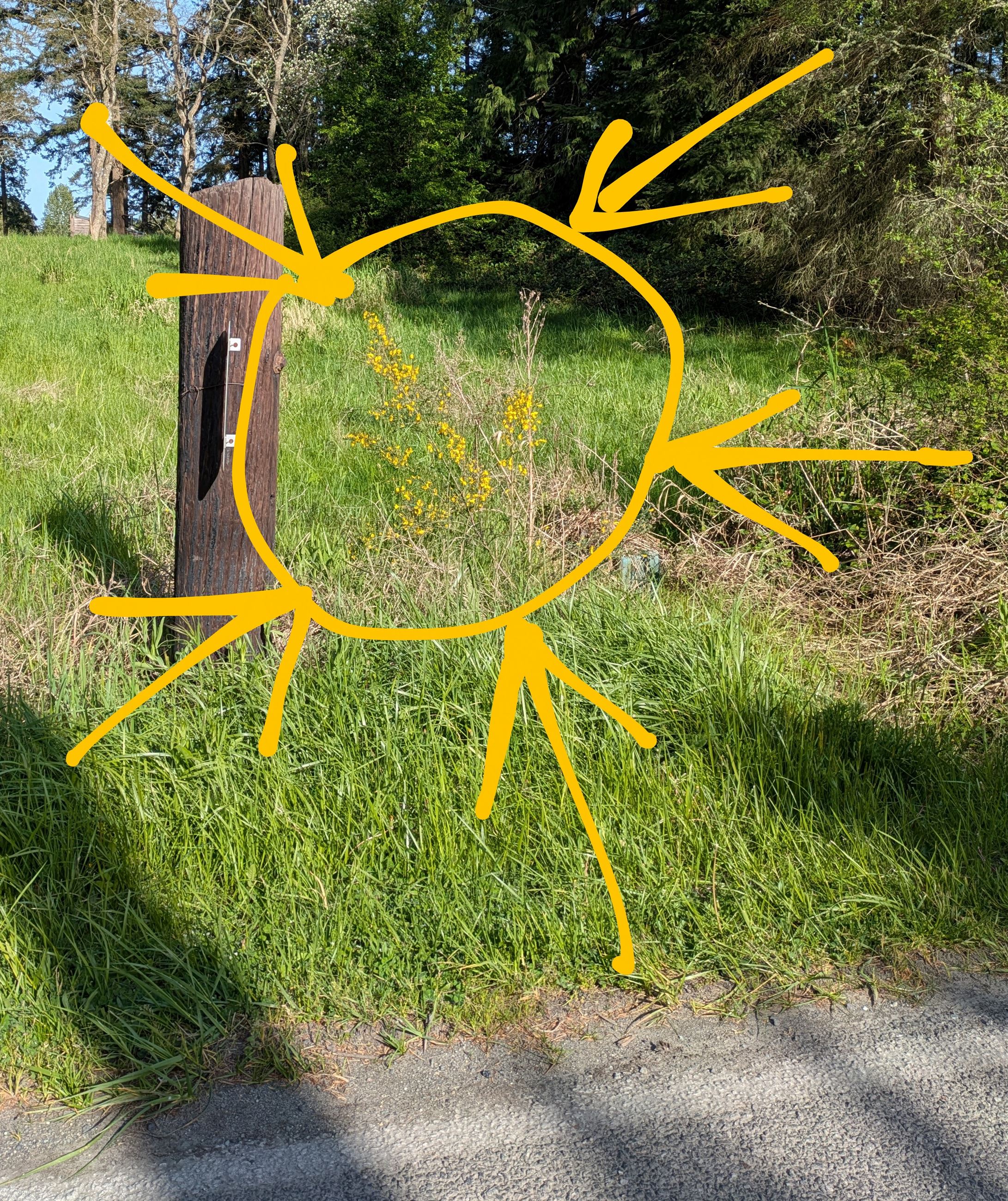 yard, neighbor’s yard, or along the roadside, are the highest priority for removal. While they may appear innocent, these satellite populations are the frontier of the invasion. Nipping them off is a potent strategy to contain future broom patches. Please take a moment from other yardwork, your walk, or trip to/from the ferry to knock out these pioneer plants. It takes a community to keep invasive plants in check! Thank you for your efforts.
Is beauty getting in the way of breaking it off with your broom? Remember there are many non-invasive substitutes for Scotch broom. Diverse native vegetation offers far more to our island ecosystems than a monoculture of broom. If you’re partial to gold, replace your broom with tall Oregon grape or forsythia.
For more information and strategies, please get in touch! Noxiousweeds@sanjuancountywa.gov or 360-376-3499