November 25, 2025
As staff members of the San Juan County Noxious Weed Program, we find ourselves in a number of backyards, fields, and forests, puzzling over the toughest invasive plants, striving to assist residents in coming up with management plans that work for their goals and resources.
Recently I was invited to the home of an exasperated gardener to behold their veggie dreams infested with field bindweed (Convolvulus arvensis). A member of the morning glory family, field bindweed is a vigorous, herbaceous vine that sprawls across the ground in search of a scaffold to climb (your carrot tops should do!). As it constricts up the stem of the host, it produces a flush of leaves that compete for light, then an array of white, satellite-shaped flowers about the size of a quarter, and finally a sprinkling of loooong-lived seed. Below ground the bully excels in root and shoot development that allows the plant to survive many a furious surface weeding. In the late summer when the grass has been brown for weeks, bindweed is green, lush, and blooming! In the late stages of bindweed's reign, it can cover a garden like ivy in a miniature city park. 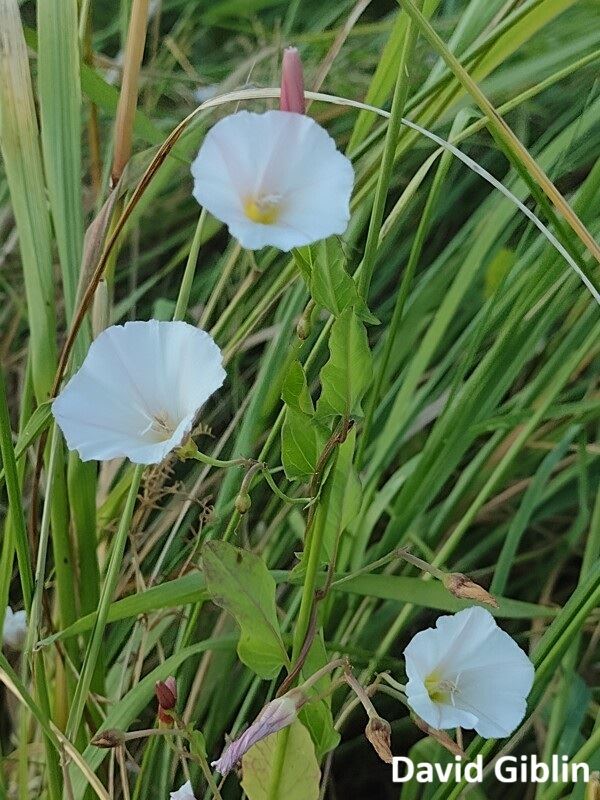
You don't want it. Bindweed is known as one of the toughest noxious weeds to manage once it gets established. Prevention is key, so research the origin of hay, mulch, soil, cover crop seed, transplants, or the heavy equipment you introduce to your parcel. Buy from tidy operations or knowledgeable vendors that strive to prevent contamination of their products with viable seed.
You have it. Vigilance is key to save yourself time and toil in the long run. Come up with a system to survey known bindweed sites and routinely weed them out...ruthlessly. You may have a shot at eradication at this stage, and wouldn't that be nice!
You REALLY have it. Don't panic, but please don't visit me without donning your hermetically-sealed onesie (mostly kidding, but leave your seed-infested boots at home). There are legends of some gardeners bringing these spaces back from the brink, but the goal at this stage is developing systems for living with bindweed rather than fantasizing about eradication. Consider abandoning the most infested areas and focus your gardening in easier locations. Mow or cover heavy infestations to reduce seed production. Avoid soil disturbance, which can activate a latent seed bed and propagate tilled fragments, and become a practitioner of low-till growing techniques. Durable, UV-resistant, easily-movable covers (sufficiently weighed or pinned down from the wind!) can be useful tools for managing aisles and edges, as bindweed weaves and winds its way to the surface in porous wood mulch or between the seams and rips of cardboard. Plastic barriers will need to be lifted and reset periodically to keep them from being hopelessly anchored by weed and grass seed germinating on top and growing down through the barrier to the soil.
Look-alike Alert! Don't be a fool (like me) and freak out about field bindweed's much less threatening doppelganger: black bindweed AKA wild buckwheat AKA Fallopia convolvulus. Check out these photos on the UW Burke Herbarium site. Hedge bindweed (Calystegia sepium), also strikingly similar, is a weedy native found in the islands.
Check out this source from WSU Extension for more information about bindweed and control strategies.
Have you succeeded in getting the upper hand on bindweed? PLEASE share your management system with us, so we can spread the good word. Also get in touch if you would like no-cost identification or management assistance: noxiousweeds@sanjuancountywa.gov, 360-376-3499.
Thanks to Caitie Blethen and Rebecca Moore of the WSU Extension, and to the San Juan County Master Gardeners who shared their experience finding themselves in the bind (weed).